C# | WPF Prism Screen Navigation
C# WPF Prism screen navigation using navigation regions
I'll explain how to navigate between screens using WPF Prism in C#.
As shown below, this is a process where the screen switches when you press a button.
(It's not a dialog — the content inside the screen itself switches.)
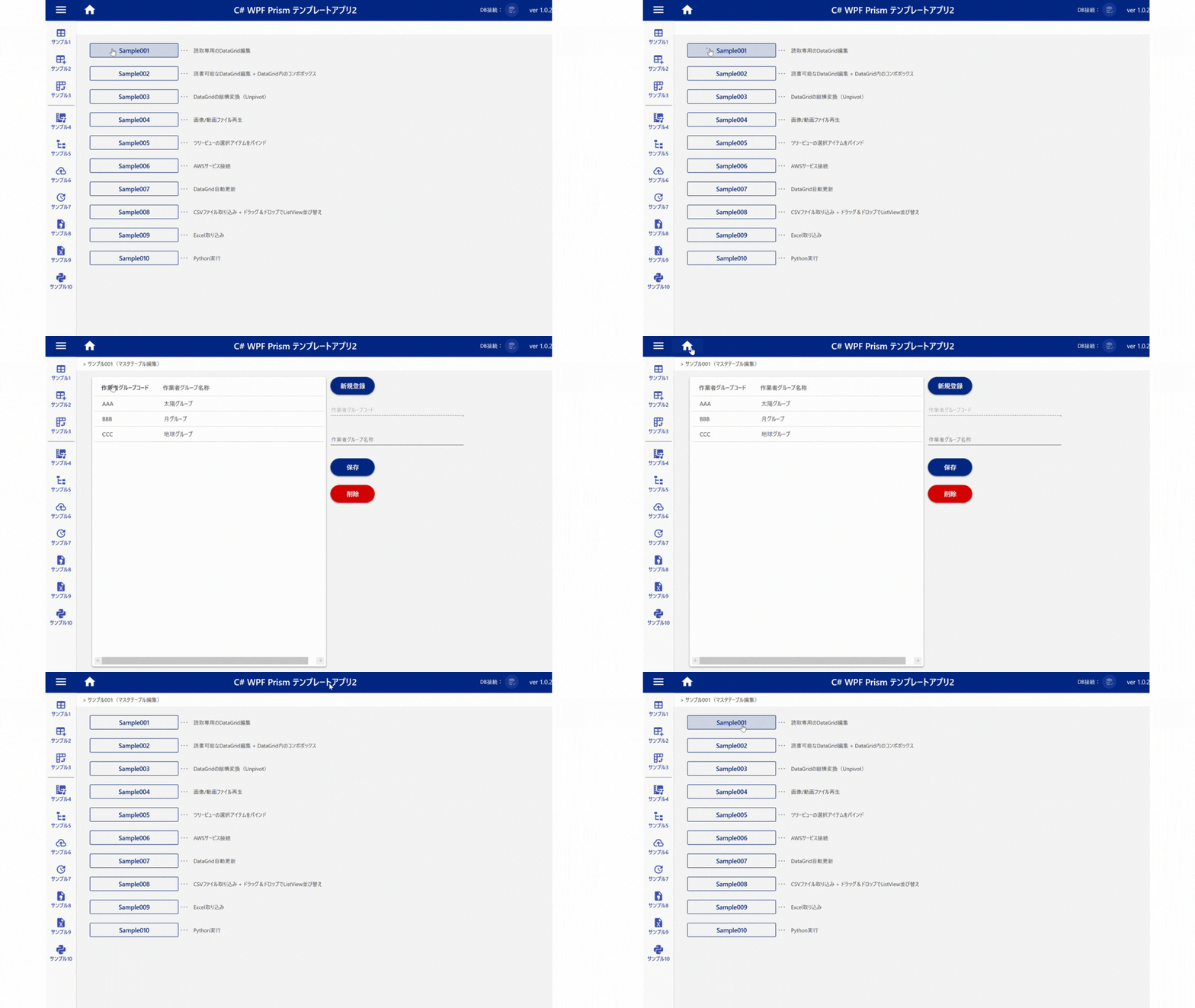
Target Files (Example)
The files you need to code are A through C below.
Views/
 |-MainWindowView.xaml(画面遷移元) ・・・A
 |-SampleNavigationView.xaml(画面遷移先)

ViewModels/
 |-MainWindowViewModel.cs(画面遷移元) ・・・B
 |-SampleNavigationViewModel.cs(画面遷移先) ・・・C

App.xaml.cs ・・・D
MainWindowView.xaml (source of navigation) ・・・A
①Add a Command to the button
For the button on the View that navigation starts from, add the delegate command name via Binding on Command.
<Button Content="Sampleナビゲーション画面"
        FontSize="14"
        Margin="10"
        Padding="5"
        Command="{Binding SampleNavigationViewButton}"/>
MainWindowViewModel.cs (source of navigation) ・・・B
②Add an IRegionManager field to the ViewModel
Add a private IRegionManager field to the ViewModel that navigation starts from, and set it in the constructor.
③Add the method that runs when the button is pressed
Add the delegate command property that receives the button-press event, and implement the Execute method for when the button is pressed.
▼Sample code for ② and ③ above
private IRegionManager _regionManager;  //// 画面遷移(ナビゲーション)

//// コンストラクタ
public MainWindowViewModel(IRegionManager regionManager)
{
    //// 画面遷移用(ナビゲーション)
    _regionManager = regionManager;

    SampleNavigationViewButton = new DelegateCommand(SampleNavigationViewButtonExecute);
}

public DelegateCommand SampleNavigationViewButton { get; }

private void SampleNavigationViewButtonExecute()
{
   //// 画面遷移処理(ナビゲーション)
   _regionManager.RequestNavigate("ContentRegion", nameof(SampleNavigationView));
}
SampleNavigationViewModel.cs (navigation destination) ・・・C
④Implement the INavigationAware interface
Implement the INavigationAware interface and the IRegionMemberLifetime interface on the ViewModel that is the navigation destination.
※Added 2023/3/5
To release the ViewModel instance's memory, I've added an implementation of the IRegionMemberLifetime interface.
⑤Change the interface methods
Implementing INavigationAware adds IsNavigationTarget — set its return value to true, and set KeepAlive to false. This lets memory be released when the view is destroyed.
▼Sample code for ④ and ⑤ above
public class SampleTableEditViewModel : BindableBase, INavigationAware, IRegionMemberLifetime
{
    /// <summary>
    /// ViewModel破棄に伴いメモリ開放する際はfalse
    /// </summary>
    public bool KeepAlive { get; set; } = false;

    //// 各種処理

    public bool IsNavigationTarget(NavigationContext navigationContext)
    {
        //// RegionMemberLifetime(KeepAlive = false)でViewModelを破棄するため、こちらはTrue
        return true;
    }

    public virtual void OnNavigatedFrom(NavigationContext navigationContext)
    {
    }

    public virtual void OnNavigatedTo(NavigationContext navigationContext)
    {
    }
}
App.xaml.cs ・・・D
⑥Register the View inside RegisterTypes
protected override void RegisterTypes(IContainerRegistry containerRegistry)
{
    //// ナビゲーション画面
    containerRegistry.RegisterForNavigation<SampleNavigationView>();
}
Any View registered with containerRegistry.RegisterForNavigation becomes eligible for navigation.
Related plants
More Tech articles →C# | How to call a MainWindow method from a partial View in WPF Prism
In WPF Prism, you can call a method on the Main Window from a partial view. Using Prism's Event Aggregator avoids direct references between view models and makes it easy to handle events raised within the application.
#csharp#wpf#prismC# | How to call a View method in ContentRegion from MainWindow in WPF Prism
In WPF Prism, an application may consist of a main window and a set of regions contained within it, hosting views and view models that communicate with each other. This explains how to call a method on a view or view model in the Content Region from the Main Window.
#csharp#wpf#prismC# | How to implement video (MediaElement) in WPF Prism using the MVVM pattern
How to implement video playback (MediaElement.Play()) in WPF Prism using the MVVM pattern.
#csharp#wpf#prism